
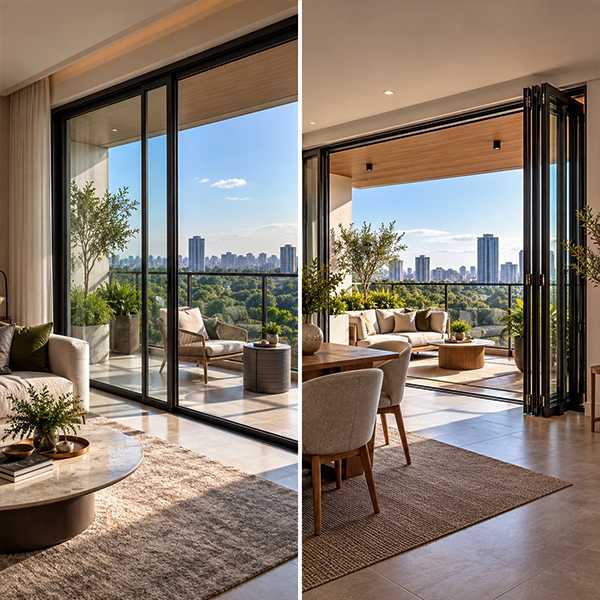
Sliding vs Folding Doors: Is a PVC Folding Door Better for Balconies and Compact Spaces?
Choosing the right door can make a significant difference to how a balcony, bedroom, kitchen, or compact living area looks and functions. Sliding and folding doors are popular options because they help manage space while allowing natural light and ventilation. However, the best choice depends on the available opening, furniture placement, privacy requirements, and how frequently the door will be used. A pvc folding door can be a practical solution for interiors where flexibility and space efficiency matter, while sliding doors are often suitable for balconies and wider openings. Understanding their differences helps homeowners make an informed decision. Dhabriya Polywood offers modern door and window solutions worth exploring when planning a functional, well-designed space.
What Is the Difference Between Sliding and Folding Doors?
Sliding doors move horizontally along tracks, whereas folding doors consist of connected panels that fold to one side when opened. Sliding systems generally require clear track space but little room for door movement. Folding systems can create a wider opening, although the folded panels need space beside the doorway.
Both options can improve the usability of compact homes. The important difference is how much of the doorway remains accessible when the door is open.
Sliding Doors: Best for Balconies and Wide Openings
Sliding doors typically feature two or more panels, with at least one moving along a track. Depending on the design, they can incorporate large glass sections that connect indoor spaces with balconies and outdoor views.
Their main advantage is that the panels do not swing into the room. This makes them useful in apartments where furniture, walkways, and limited floor space need careful planning.
Folding Doors: Best for Flexible Interior Spaces
Folding doors use multiple panels connected by hinges or a folding mechanism. When opened, the panels stack together, creating a wider passage than many conventional sliding configurations.
A pvc folding door may be suitable for separating bathrooms, kitchens, utility areas, or other interior spaces where a conventional hinged door would obstruct movement. Its suitability depends on the product’s construction, dimensions, hardware, and intended environment.
Is a PVC Folding Door Better Than a Sliding Door for Compact Spaces?
Neither option is universally better. Sliding doors are generally preferable when you want unobstructed floor space, a clean appearance, and access to a balcony. Folding doors are useful when you want to open most of a doorway or divide interior spaces flexibly. The right choice depends on opening width, clearance, privacy, maintenance, and budget.
Here is how the two options compare across practical considerations.
| Feature | Sliding Doors | Folding Doors |
| Opening mechanism | Panels move along tracks | Panels fold to one side |
| Floor clearance | No swing clearance required | No conventional swing, but panels need stacking space |
| Accessible opening | Limited by panel overlap and configuration | Can expose a larger portion of the doorway |
| Balcony suitability | Often excellent, especially with glass panels | Useful for selected designs and openings |
| Interior partitions | Suitable for room dividers | Useful for flexible separation |
| Maintenance | Track cleaning and roller inspection | Hinge, joint, and hardware inspection |
| Appearance | Streamlined and contemporary | Flexible and functional |
The comparison shows that opening mechanism alone should not determine your purchase. Measure the complete doorway and consider how the surrounding space will be used.
Which Door Is Better for Balconies?
Sliding doors are often the more practical choice for balconies because they combine space efficiency with convenient access and the option of large glazed panels. They are particularly useful in apartments where a swinging door could interfere with furniture or narrow walking paths.
Why Sliding Doors Work Well on Balconies
- Space efficiency: The panels move parallel to the wall instead of swinging into the room.
- Natural light: Glazed designs can brighten adjoining interiors.
- Outdoor connection: Large panels provide views of the balcony and surroundings.
- Everyday convenience: A well-designed track and roller system can make regular operation easier.
However, balcony doors require more than attractive looks. Check weather sealing, drainage, locking arrangements, glass specifications, and resistance to local wind and rain conditions. These features vary by product and installation.
Homeowners comparing options from upvc sliding doors manufacturers should also evaluate frame quality, hardware, available configurations, installation support, and after-sales service rather than relying on appearance alone.
When Should You Choose a PVC Folding Door?
A folding door makes sense when the priority is flexible access or dividing a compact interior without installing a conventional swing door. It can be useful in bathrooms, storage areas, kitchens, and utility spaces, depending on the product’s moisture resistance and intended application.
Consider these situations:
- Small bathrooms: A folding design may reduce interference with nearby fixtures.
- Utility areas: It can provide convenient access where a full swing would block movement.
- Compact kitchens: Selected folding systems can help separate areas without requiring a large swing radius.
- Flexible partitions: Folding panels can open up a passage when a wider connection between spaces is needed.
Before choosing a pvc folding door, verify the panel dimensions, folding direction, hardware durability, cleaning requirements, and suitability for the intended exposure to moisture. PVC products vary considerably, so do not assume every model is waterproof, soundproof, or equally durable.
What Factors Should You Consider Before Buying?
The right door should fit the opening, withstand everyday use, and complement the room’s design. Compare these five factors before making a decision.
1. Available Space
Measure the opening width and height. For sliding doors, check the required track and panel overlap. For folding doors, confirm that the stacked panels will not block cabinets, switches, furniture, or nearby walkways.
2. Material and Durability
PVC, uPVC, aluminium, and other materials have different characteristics. Compare frame rigidity, resistance to moisture, finish quality, hardware, and suitability for indoor or outdoor installation. Material names alone do not guarantee performance.
3. Privacy and Ventilation
Consider whether the room needs an opaque panel, clear glass, frosted glazing, or controlled ventilation. Bathrooms and bedrooms usually have different privacy requirements from balconies and living rooms.
4. Maintenance and Safety
Look for accessible cleaning surfaces, reliable locks where required, and hardware suited to the door’s weight and frequency of use. For glazed balcony doors, check that the specified safety glass meets applicable requirements.
5. Budget and Installation
Compare the total installed cost, including frames, tracks, hardware, finishing, and labour. A lower initial price may not represent the best value if replacement parts are difficult to obtain or installation quality is poor.
For broader renovation planning, explore uPVC doors and windows to understand the available material and design options for different areas of the home.
How Can You Choose the Right Door for Your Home?
Start by identifying the door’s main purpose. If it connects a living room to a balcony, prioritise weather performance, glazing, secure locking, and smooth sliding operation. If it separates a bathroom or utility area, focus on clearance, privacy, moisture suitability, and ease of cleaning.
Next, measure the opening and test how the proposed panels will move. Ask the supplier about warranty coverage, hardware specifications, installation tolerances, and maintenance requirements.
For rooms that need more natural light or a contemporary finish, PVC sliding doors may be worth considering. If your renovation also includes matching window designs,uPVC windows can help you explore coordinated options.
Dhabriya Polywood’s website, https://www.polywood.org/, is a useful starting point for researching available door and window solutions. Confirm the specifications and availability of individual products before finalising your purchase.
Conclusion
Sliding and folding doors solve different space-planning problems. Sliding doors are generally a strong choice for balconies because they preserve floor clearance and can accommodate large glass panels. A pvc folding door is often more suitable for compact interiors where a wider passage or flexible separation is important. Before purchasing, compare measurements, material quality, hardware, privacy, maintenance, and installation costs. Dhabriya Polywood can be considered during your research into door and window solutions, but the best option will ultimately be the one that matches your space, usage, and performance requirements.
FAQs
1. Which is better for a balcony, sliding or folding doors?
Sliding doors are generally better for balconies because they save floor space, offer convenient access, and can accommodate large glass panels. The final choice depends on the opening size, weather exposure, and design requirements.
2. Is a PVC folding door suitable for small rooms?
Yes. A PVC folding door can work well in compact bathrooms, utility areas, and selected kitchen spaces because its panels fold aside instead of swinging into the room. Check the product’s dimensions and moisture suitability before purchasing.
3. Are sliding doors more durable than folding doors?
Not necessarily. Durability depends on the frame material, hardware quality, installation, and maintenance. Sliding doors require functional rollers and tracks, while folding doors depend on reliable hinges and folding mechanisms.
4. Do folding doors require more maintenance?
Folding doors may require periodic inspection of hinges, joints, and other moving components. Sliding doors need their tracks cleaned and rollers checked. Maintenance frequency depends on usage, product quality, and environmental conditions.
5. Can PVC folding doors be used in bathrooms?
Yes, provided the selected product is designed for bathroom conditions. Check its resistance to moisture, ventilation requirements, hardware quality, and cleaning instructions before installation.
6. What should I check when choosing uPVC sliding doors manufacturers?
Compare material specifications, frame construction, glazing options, locking systems, weather sealing, installation expertise, warranties, and after-sales support. Ask for product specifications rather than relying solely on promotional claims.
7. Where can I explore modern door and window solutions?
You can visit Dhabriya Polywood to research door and window solutions and check which designs and specifications suit your project.