
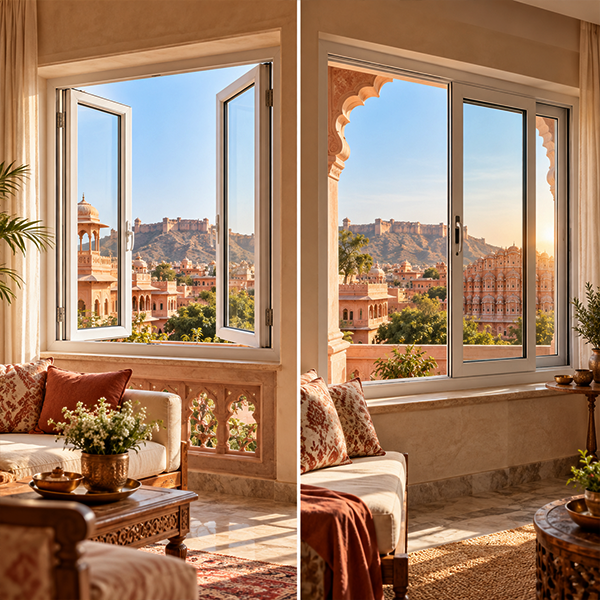
Casement vs Sliding Windows: Choosing the Best uPVC Windows in Jaipur Homes
Jaipur’s hot summers, strong sunlight, seasonal dust and monsoon rains make window selection an important part of home design. The right windows should do more than look attractive; they should support ventilation, comfort, security and easy maintenance. This is why many homeowners exploring upvc windows in jaipur compare casement and sliding designs before making a decision.
Both styles offer practical advantages, but neither is ideal for every room. Casement windows open on hinges, while sliding windows move horizontally along a track. Understanding their differences can help you choose windows that suit your room layout, ventilation needs and budget. Here is a practical comparison to help you make an informed choice for your Jaipur home.
Which Is Better for Jaipur Homes: Casement or Sliding Windows?
Casement windows are generally a stronger choice when ventilation, opening control and tight closure are priorities. Sliding windows are often better for compact spaces, wide openings and convenient horizontal operation. For Jaipur homes, the best option depends on each room’s layout, exposure to sunlight, dust levels, preferred ventilation and the quality of the complete window system.
What Is the Difference Between Casement and Sliding uPVC Windows?
Casement windows have one or more sashes attached to the frame with side or top hinges. They can swing inward or outward, depending on the design, and may open wide to let fresh air into a room.
Sliding windows operate through rollers and tracks. One or more panels move horizontally, usually overlapping the fixed or other sliding panels. Since the panels remain within the frame, they do not need additional clearance to swing open.
Both styles are available with uPVC frames. The material is valued for its relatively low maintenance requirements, while the complete window’s performance also depends on its glass, seals, hardware, fabrication and installation. Dhabriya Polywood offers both casement and sliding designs for residential and other building applications.
Casement vs Sliding Windows: Quick Comparison
| Feature | Casement uPVC windows | Sliding uPVC windows |
| Opening mechanism | Hinged sash swings inward or outward | Panels glide horizontally |
| Ventilation | Wide opening potential | Limited by the opening panel configuration |
| Space | Needs swing clearance | No swing clearance needed |
| Air leakage | Hinged closure can seal tightly | Performance depends on track, seals and design |
| Everyday operation | Hinges and handles need upkeep | Tracks and rollers need cleaning |
| Suitable locations | Bedrooms, living rooms and selected kitchens | Apartments, balconies and compact rooms |
The table provides a general guide, not a performance guarantee. Actual results vary with window dimensions, product specifications, fitting and maintenance.
Which Window Style Works Better in Jaipur’s Climate?
For Jaipur homes, choosing the right glazing and sealing can be just as important as choosing the opening style. Casement windows can be attractive where a tight closing mechanism and controlled ventilation matter. Sliding windows are useful where swinging panels would obstruct a passage, furniture or balcony space.
Summer comfort deserves particular attention. The Bureau of Energy Efficiency (BEE) identifies the overall window’s U-factor, Solar Heat Gain Coefficient (SHGC) and visible light transmittance as important performance measures. In hot climates, SHGC matters because it indicates how much solar heat enters through the window assembly.
This means a well-specified sliding window with suitable glass and good installation may perform better for heat control than a poorly specified casement window—and vice versa. Consider the direction each window faces and how much direct sunlight reaches it before finalising the design.
Which Window Is Best for Different Rooms?
The most practical approach is to choose windows according to the purpose of each room rather than installing one style throughout the house.
Bedrooms and living rooms
Casement windows are worth considering when you want a wide opening for ventilation and a closing system that presses the sash against the frame. They can suit rooms where airflow is a priority, provided the opening will not interfere with curtains, furniture or an exterior walkway.
Apartments and compact rooms
Sliding windows are often convenient where space is limited. Their panels remain within the frame, making them suitable for rooms close to furniture, narrow passages or balconies. They also work well for broad window openings where horizontal operation is preferred.
Kitchens and balconies
Either style can work, depending on the opening size and layout. A casement design may help when airflow is a priority, while a sliding design can provide convenient operation where swing clearance is restricted. Consider privacy, insect screens, cleaning access and protection from rain before deciding.
For larger homes, a combination design may provide another option by pairing fixed glass with an opening panel. The final configuration should match the room’s ventilation requirements and the building’s appearance.
Do Casement Windows Offer Better Dust and Noise Protection?
Casement windows can have an advantage in air leakage because their hinged sashes press against the frame when closed. The U.S. Department of Energy notes that casement windows generally have lower air leakage rates than sliding windows, although the actual result depends on the design, weatherstripping and condition of the seals.
Department of Energy
For homes near busy roads or areas exposed to dust, a properly sealed window can help reduce unwanted outdoor air and noise. However, no opening style makes a room completely dustproof or soundproof. Glass thickness, glazing configuration, frame joints and professional installation all influence the result.
If ventilation and closure are priorities, compare uPVC casement windows with suitable glass and sealing options rather than judging performance by appearance alone.
What Should You Check Before Buying uPVC Windows?
Before selecting a design, ask the manufacturer or installer about five important factors.
- Glass selection: Compare single and double glazing where available. Ask about thermal performance, noise reduction and the amount of sunlight entering your room. More layers are not automatically the best solution for every opening.
- Frame and seals: Check the profile construction, gasket quality, corner joints and drainage arrangements. The complete assembly matters more than the frame material alone.
- Hardware and security: Review hinges, handles, rollers and locking mechanisms. Hardware should suit the size and weight of the window, and replacement parts should be available when needed.
- Installation quality: Confirm that the supplier will take accurate site measurements, align the frames properly and seal the perimeter. Gaps around a window can undermine the performance of an otherwise well-made product.
- Warranty and maintenance: Read the warranty conditions and ask what it covers. Sliding tracks need periodic cleaning, while casement hinges and locks should be checked and maintained as recommended by the manufacturer.
When comparing uPVC sliding windows, ask for the same details about glass, hardware, installation and warranty that you would request for a casement design. This makes quotations easier to compare fairly.
Common Mistakes to Avoid When Choosing Windows
One common mistake is choosing windows based on price alone. Two quotations may look similar but include different glass, locking systems, accessories or installation services.
Another mistake is assuming that all uPVC windows deliver identical insulation or weather resistance. Product specifications and fitting quality can vary, so ask for clear technical details instead of relying on broad claims.
Finally, do not overlook how a window will be used daily. A wide-opening casement may suit one bedroom but become inconvenient beside a narrow balcony. A sliding unit may save space but not provide the same opening area as a fully opened casement. Think about cleaning access, furniture placement, insect screens and safe operation before approving the final design.
Conclusion
Neither casement nor sliding windows are universally better for Jaipur homes. Casement designs are worth considering for ventilation and tight closure, while sliding windows are practical when space-saving operation and wide openings matter. The right choice also depends on glazing, frame quality, sealing and installation. Explore the options available from Dhabriya Polywood, compare complete specifications and select each window according to the room’s needs. A thoughtful choice can help improve everyday comfort, functionality and the appearance of your home.
FAQs
1. Which is better for Jaipur homes: casement or sliding uPVC windows?
Casement windows are a good option for ventilation and tight closure. Sliding windows are more suitable where saving space and convenient horizontal operation are priorities. Your room layout and window specifications should guide the final choice.
2. Are uPVC windows suitable for Jaipur’s hot weather?
Yes, uPVC windows can be suitable for Jaipur homes when correctly specified and installed. Glass selection, solar heat gain, frame construction and effective sealing are important for indoor comfort.
3. Are casement windows better at keeping dust out?
Casement windows can offer lower air leakage because the hinged sash presses against the frame when closed. However, dust protection also depends on the seals, fabrication, installation and maintenance.
4. Do sliding uPVC windows save space?
Yes. Sliding windows operate horizontally within the frame, so their panels do not need additional clearance to swing inward or outward. This makes them practical for compact rooms and many balconies.
5. Which uPVC window style is more energy-efficient?
Neither style is automatically more energy-efficient in every situation. Performance depends on the complete window, including glass, frame, seals and installation. Casement designs can have lower air leakage, while suitable glazing helps control heat gain.
6. What should I check before buying uPVC windows from Dhabriya Polywood?
Compare the profile specifications, glass options, hardware, sealing, installation process and written warranty. Consider your room’s ventilation and space requirements, and request a detailed quotation before making a decision.