
Wet Area Doors Explained: Choosing the Right PVC Door for Bathrooms and Utility Spaces
The Silent Damage Happening Right Now
Your bathroom encounters something most rooms never face: constant moisture and humidity. Every shower, every sink use, every steam from hot water creates an environment where materials deteriorate rapidly.
If you’ve walked into older homes and seen bathroom doors that look destroyed—swollen, discolored, smelling stale—that’s what happens when the wrong material meets persistent dampness. The degradation is gradual at first, then accelerates suddenly.
Most people install whatever door is available without considering what that specific environment demands. They might grab a basic option from any PVC door manufacturer without evaluating whether it’s actually suited for their climate. This leads to replacement cycles every few years, spending money repeatedly on something that should last decades. If you live in regions like Jaipur, finding the best PVC door in Jaipur—one specifically engineered for intense heat and humidity—becomes essential rather than optional.
How Traditional Doors Fail Under Moisture
Wood responds predictably to water exposure. The cellular structure contains air pockets. When moisture fills those pockets, the wood swells. But swelling isn’t uniform—different sections expand at different rates, creating stress fractures and warping.
The paint coating eventually separates because the substrate underneath keeps changing dimensions. Paint becomes a peeling mess within a year or two.
Then biological colonization happens. Fungi and mold find the damp wood irresistible. Growth spreads through the door and into surrounding walls. The smell signals serious structural compromise.
By this point, the door is compromised internally. Replacement becomes the only real solution.
Metal doors initially seem superior. The problem emerges over time as moisture triggers chemical reactions that eat away at the material from within. Internal rust progresses silently, unseen. When the door finally fails, it often happens suddenly without warning signs.
Both categories ultimately cost homeowners thousands in repeated repairs, water damage mitigation, and eventual replacement.
Why This Matters for Specific Spaces
Certain rooms within homes face elevated moisture loads that demand specialized solutions. Bathrooms obviously—every shower generates humidity that persists for hours. Laundry spaces produce intense steam and temperature fluctuations. Utility rooms, wash areas, and service spaces all create similar moisture-heavy environments.
Standard residential doors weren’t engineered for these conditions. They work fine in bedrooms and living spaces where humidity levels stay relatively controlled. But in wet environments, they deteriorate rapidly regardless of brand or initial quality.
The solution isn’t fixing doors more frequently. It’s selecting materials designed specifically for these challenging environments.
Understanding PVC as a Material Solution
PVC is a synthetic plastic material with a fundamental characteristic: it doesn’t absorb water. Water contacts the surface and either evaporates or drains away. The material itself isn’t affected.
This single property eliminates the primary failure mechanisms that destroy wood and metal doors in damp conditions.
Beyond basic water impermeability, several practical benefits emerge:
Maintenance becomes genuinely minimal. No painting required. No protective sealants to reapply annually. No special treatments or preparations. Wipe it clean occasionally with basic soap and water. That’s the extent of upkeep.
Longevity extends significantly. While wooden doors deteriorate within 3-5 years in bathroom conditions, PVC doors reliably perform for 15-20+ years. Some installations exceed 25 years with zero structural failure.
Installation efficiency improves. The material’s lightness means straightforward hanging processes. Less labor time. Reduced stress on mounting hardware. Equipment and hinges last longer because they’re not straining to support heavy material.
Budget accessibility exists. Quality doors don’t require premium pricing. Functional durability is inherent to the material rather than something you pay extra for.
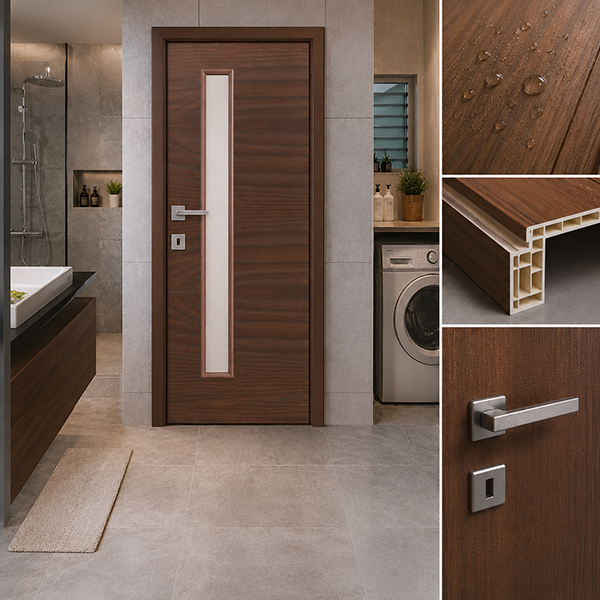
Aesthetic variety is available. Manufacturers produce convincing wood-grain effects, solid finishes in multiple colors, textured surfaces, and combinations with frosted glass inserts. You’re not limited to an obviously plastic appearance.
Quality Variation Within PVC Doors
Material composition varies significantly. Some PVC formulations are denser and more durable than others.
Grade specification determines performance. Higher-grade PVC resists cracking, UV fading, and impact damage substantially better than budget formulations. The difference becomes apparent within a year or two of use.
Thickness affects real-world durability. Thin hollow doors flex excessively and feel insubstantial. Thicker solid construction absorbs daily stress without degradation. The difference is noticeable immediately upon using the door.
Component quality matters significantly. Hinges, locks, and handles experience corrosive moisture exposure. Corrosion-resistant metals (stainless steel, zinc-plated finishes) perform reliably for years. Budget hardware corrodes, seizes, and requires replacement. Many people blame the door when actually the hardware failed.
Assembly methodology affects longevity. How panels are reinforced, how seams are sealed, whether edges receive protective treatment—these details separate doors that last decades from doors that develop problems within years.
Ventilation features improve bathroom conditions. Doors with louver panels or slat designs promote airflow while maintaining privacy. This reduces overall moisture accumulation in the bathroom, benefiting everything in the space.
Evaluating and Selecting From Suppliers
When you’re ready to purchase, working with an experienced PVC door manufacturer provides several advantages. An established PVC door manufacturer offers:
Product knowledge about which formulations suit specific applications. Not every door works equally well in every scenario. A competent PVC door manufacturer helps match products to your actual conditions.
Technical specifications and transparency. They can explain material grades, thickness options, hardware specifications, and performance characteristics. This transparency indicates they stand behind their products.
Warranty coverage that demonstrates confidence. The terms, duration, and scope of coverage tell you how much faith the manufacturer has in their products.
Local support infrastructure. A PVC door manufacturer with regional service capacity means getting repairs or assistance when needed, rather than dealing with distant suppliers.
Matching Doors to Actual Conditions
Bathrooms with multiple daily users: Heavy traffic creates accumulated stress. Invest in robust solid construction specifically rated for high-use residential applications.
Laundry and drying spaces: Steam intensity and temperature fluctuations here exceed typical bathrooms. Select heavy-duty options with surfaces that handle frequent cleaning without degrading.
Utility and mechanical rooms: Heat sources, equipment, and persistent dampness create harsh conditions. Commercial-grade doors engineered for these environments outperform residential options.
Guest bathrooms or powder rooms: Occasional use means lighter-duty options perform adequately. Decorative elements become viable in low-stress applications.
Climate-Specific Considerations
Regions experiencing seasonal humidity swings, intense heat, or consistent dampness require careful material selection. In climates like these, searching for the best PVC door in Jaipur becomes essential because local conditions specifically punish standard materials.
The best PVC door in Jaipur needs formulation stability across temperature extremes and humidity fluctuations. Materials engineered for tropical or subtropical conditions with dust loads perform better than generic options. When selecting the best PVC door in Jaipur, prioritize:
Doors specifically rated for regional climate patterns. Generic products designed for temperate climates perform differently in intense heat and variable humidity.
Installation by professionals familiar with local conditions. Proper installation in regional climate patterns requires understanding how moisture behaves in your specific area.
Material formulations tested in similar environments. Ask whether the door has been field-tested in conditions matching your region. This matters more than general specifications.
Frequent Selection Errors
Buying based exclusively on lowest price. Budget options fail faster, creating worse total lifetime costs. Calculate five-year and ten-year expenses, not just initial purchase price.
Assuming all PVC doors are equivalent. Quality variation is substantial. Material grade, thickness, assembly methodology all matter significantly.
Overlooking hardware quality. Superior door with inferior hinges and locks creates daily frustration and premature failures.
Selecting suppliers without track records. Established manufacturers with customer references and warranty coverage reduce risk substantially.
Choosing based on appearance alone. Aesthetics matter, but functionality and durability matter more when the door is used multiple times daily.
Practical Maintenance Approaches
Minimal care keeps doors performing consistently:
- Wipe surfaces regularly with mild soap and soft cloth
- Avoid abrasive cleaners, scouring pads, or harsh chemicals
- Inspect hinges and locks seasonally for corrosion or looseness
- Ensure adequate bathroom ventilation through fans or windows
- Address hardware issues immediately before they worsen
These simple practices extend door lifespan significantly
Conclusion
Bathroom door selection doesn’t generate excitement. It’s practical infrastructure. But infrastructure decisions compound over years, affecting maintenance costs, water damage risk, and functional reliability.
Selecting appropriate materials for wet environments prevents expensive problems from developing. PVC doors provide durability, low maintenance, and reliable performance where traditional materials fail repeatedly. When choosing a trusted PVC door manufacturer, prioritize those with proven experience in your region. For homeowners searching for the best PVC door in Jaipur, companies like Dhabriya Polywood have established themselves as reliable suppliers offering doors specifically engineered for local climate conditions.
Whether renovating existing spaces or building new, investing in proper wet area doors from an experienced PVC door manufacturer is a practical decision that validates itself continuously through trouble-free performance. Choosing quality options ensures your bathroom doors remain functional and maintenance-free for decades to come.