
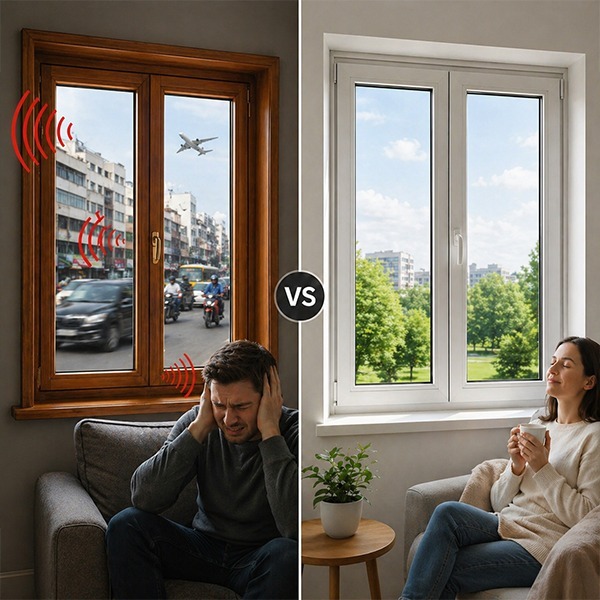
Can Traditional Windows Really Block Noise? uPVC vs Regular Windows Compared
Noise has slowly become something people live with without even noticing it at first. It is not always loud or disturbing in one moment. Sometimes it is just constant. Traffic passing again and again, people talking outside, construction sounds that don’t really stop. After a point, it starts affecting how a home feels.
Many people try to fix this in different ways. They add curtains, shut doors properly, or shift rooms. But one thing that usually gets ignored is the window. That is actually where most of the outside sound comes in.
So the question becomes simple. Do regular windows really help in blocking noise, or are we just assuming they do?
Where the Noise Actually Comes From
A common assumption is that sound only enters through open spaces. That is not really true. Sound doesn’t just come in from open areas. It also slips through gaps and places where sealing is not proper.
Even when a window is closed noise can arrive, if the fitting is loose. Small gaps, which are not easy to notice, can always let the sound pass through.
This is where many traditional windows start showing their weakness. The issue is not always obvious in the beginning, but it becomes noticeable over time.
What Happens with Traditional Windows
Wooden windows have been used for years. They do feel strong and dependable. But in terms of blocking noise, the result is not always the same in every case.
A big reason is how they react to weather. In humid conditions we know that wood may expand a little and In dry weather, it can shrink. It may not seem like much, but over time it affects the fitting.
Because of that, small gaps begin to form. Not something you notice immediately, but enough for sound to pass through.
Aluminium windows are lighter and easier to handle, but they are not really made to control noise. The structure does not stop sound properly, so in many cases it passes through both the frame and the glass.
So while they work fine for basic use, noise control was never really their main purpose.
Why Small Gaps Matter More Than You Think
People often ignore this part.
Even a very small gap can allow outside noise to enter more than expected. You may not see it clearly, but you will hear it.
Over time, locks loosen slightly. Hinges shift a bit. The pressure that keeps the window sealed reduces. And once that happens, noise finds its way in more easily.
How uPVC Windows Change This
uPVC windows are made differently. The focus is more on fitting and sealing rather than just structure.
When these windows close, they press properly against the frame. Rubber layers and locking systems help keep everything tight. This reduces the chances of gaps.
Another thing is that uPVC does not react much to weather. It does not expand or shrink like wood. So once it is fitted properly, it will stay that way for a long time.
Because of this, the fitting stays stable over time and the sealing does not change much even after years. That helps in keeping the noise level under control.
The Role of Glass
Glass also plays a part, which people sometimes overlook.
In many regular windows, single glass is used. Since it is thinner, sound passes through it more easily.
In uPVC setups, there is often an option for double glass. That means two layers of glass with a small space in between.
That space helps slow down sound before it reaches inside. It won’t block everything, but it does bring the sound down to some extent.
You can notice the change, especially in areas where outside noise is more.
What This Means in Daily Life
Noise is not just about irritation. It slowly affects how comfortable your home feels.
It can disturb sleep. It can affect focus while working. Even simple things like reading or resting don’t feel as calm when there is constant background noise.
People usually realise this only after they experience a quieter space.
What Happens Over Time
Traditional windows may feel fine at first. But with time and regular use, along with weather changes, their performance starts reducing.
Gaps slowly increase. Sealing becomes weaker. And noise starts coming in more than before.
uPVC windows behave differently. They hold their shape better and are not affected much by moisture or temperature.
Because of this, they continue to perform in a similar way even after years.
Maintenance Also Makes a Difference
Maintenance plays a role here as well.
Traditional windows need attention. Hinges can loosen and frames may need repair or polishing. If this is ignored, performance slowly drops.
uPVC windows are easier in comparison. They do not need frequent adjustments hence they continue to work properly without much effort.
Not Completely Silent, But Better
Let’s be realistic.
No window can block all sound completely unless it is specially designed for full soundproofing.
uPVC windows don’t make a room silent, but they do reduce noise enough to make a difference.
Where You Notice It the Most
The difference becomes clearer in certain situations.
Homes that are close to busy roads usually feel quieter with better windows. Rooms used for work or study become more comfortable.
Even if the noise is not completely gone, it feels more manageable.
Why People Are Rethinking Their Choice
Earlier, people focused more on design and cost.
Now, they are also thinking about how well windows control noise and how long they will keep working properly.
Because of this, more people are exploring better options.
uPVC is not just a modern choice. It feels more practical for today’s needs.
Intallation Still Matters
One thing people should not ignore is installation.
Even a good window will not perform properly if it is not fitted well.
Proper fitting ensures proper sealing, and sealing is what controls noise.
At Dhabriya Polywood, the focus is not only on the product but also on how it is installed. Because in the end, what matters is how it works in real homes.
Conclusion
Traditional windows have been used for years and still serve basic needs.
But when it comes to noise, they do have certain limits.
uPVC windows feel more practical here. The sealing is tighter, the fitting stays proper, and maintenance is not much.
They don’t remove noise completely, but they do reduce it enough to make the space more comfortable.
Sometimes, the difference between a noisy room and a peaceful one comes down to choosing the right window.