
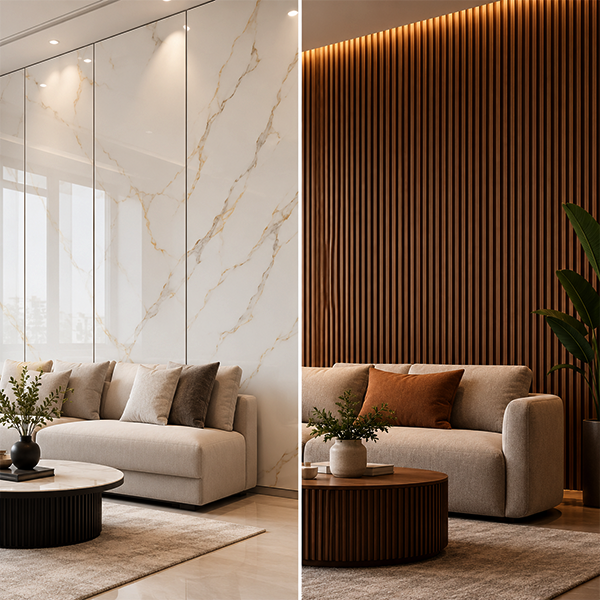
PVC Wall Panel vs Fluted Panels: Which Finish Is Better for Your Interior?
Choosing between a PVC wall panel and a fluted finish is not simply a contest between two materials. PVC describes what a panel is made from, while “fluted” describes a surface with repeated grooves or raised ribs. A fluted panel can itself be made from PVC or another material. In practice, homeowners are often comparing a relatively flat PVC wall panel with a decorative, three-dimensional fluted design.
For broad coverage and easier wiping, a plain PVC wall panel may be practical. For a feature wall with depth and shadow, fluted panels can make more impact. The right choice depends on the room, maintenance, lighting, budget and verified product performance.
What Is a PVC Wall Panel?
A PVC wall panel is an interior cladding product made from polyvinyl chloride. It covers an existing wall or ceiling and is available in different colours, patterns and textures, including wood-look finishes. Polywood’s product listing describes PVC panels for residential and commercial applications, with listed thicknesses from 6 mm to 12 mm.
Flat or subtly textured panels create a continuous look for full walls, utility areas and ceilings. They are usually easier to wipe than deep grooves. Review a real sample because gloss, print, joints and colour may look different under your lighting. For available finishes and formats, review PVC wall and ceiling panels from Polywood.
What Are Fluted Panels?
Fluted panels have repeated grooves or raised ribs that create a lined, three-dimensional surface. Light falls on the raised sections and leaves shadows in the grooves, adding depth to a wall or ceiling. The fluted pattern is a design profile, not a material category, so check whether the product is PVC, WPC, MDF, wood or another substrate.
They suit TV backdrops, headboards, entryways and reception walls. Polywood lists its fluted panels for residential and commercial settings and describes quick installation and moisture and termite resistance for its range. To compare finishes and formats, see Polywood’s wall and ceiling fluted panels and confirm the specifications for the exact product and location before buying.
PVC Wall Panel vs Fluted Panels: What Is the Difference?
Most buyers are comparing a flat PVC panel with a fluted panel in a suitable material. Use these differences to narrow down the choice.
| Factor | Flat or lightly textured PVC panel | Fluted panel |
| Visual effect | Smooth, simple and continuous | Textured, layered and more decorative |
| Best use | Larger wall areas, utility spaces and ceilings | Feature walls, headboards and reception areas |
| Cleaning | Usually easier to wipe across a flat surface | Grooves may collect dust and need extra attention |
| Design impact | Depends on colour, print and finish | Depth and shadow are built into the profile |
| Installation | Joints and edges still need careful finishing | Alignment between grooves and neat end trims are especially visible |
| Budget | Depends on thickness, finish and installation | Depends on material, profile, accessories and installation |
These are general design considerations, not guarantees. Price depends on material, finish and installation, so compare quotations that include trims, fixings, labour, wastage and surface preparation. Ask suppliers to specify the full installed cost, not only the panel rate, so estimates can be compared fairly.
Which Finish Is Better for Different Rooms?
Living Room and TV Wall
Choose fluted panels for a focal wall: their lines add depth even in restrained colours. For a full wall or calmer look, a flat PVC panel with a wood-look or plain finish may feel less busy. In a small room, one accent area can be enough. If the wall has strong daylight or spotlights, test a sample at different times because grooves can create more pronounced shadows.
Bedroom
Fluted panels can frame a headboard, while flat PVC suits minimalist styling or a continuous finish. Plan around bedside furniture, sockets and switches before installation.
Kitchen, Bathroom and Utility Area
PVC products are often considered where easy cleaning and moisture resistance matter. Polywood describes its PVC wall panels as water- and moisture-resistant, but the product must still be selected for the precise application.
Do not assume every panel is suitable for a shower enclosure, constant water contact or a wall beside a hot cooking appliance. Check the manufacturer’s use limitations, joint-sealing method and cleaning instructions.
Grooves can collect dust, grease or residue. For a backsplash or frequently splashed wall, confirm suitability rather than choosing on looks alone.
Office, Shop or Reception
Flat PVC panels create a consistent finish across broad areas; fluted panels can define a reception or brand backdrop. For commercial projects, check cleaning needs, impact resistance, replacement access and fire-performance documentation. For branded spaces, also confirm that repeat orders can match the same shade and profile.
Can Fluted Panels Be Used for a False Ceiling?
Yes, provided the product is designed for overhead installation. A false ceiling fluted panel adds linear detail to a lobby, living room or commercial space, especially when grooves align with lights or the room’s length. Confirm weight, fixings, support spacing, wiring access and recessed-light compatibility; a wall-only panel should not be assumed suitable overhead. For a ceiling-led design, compare fluted ceiling panels with your lighting and fixing plan.
How Should You Choose the Right Panel?
First decide whether you need a practical finish across a whole wall or a decorative accent. Compare samples in the room instead of relying on catalogue images.
Check the base material, thickness, finish, approved applications, fixing system, care instructions, warranty and test reports. A “fire-retardant” label alone does not confirm suitability for every project. India’s National Building Code includes fire and life-safety provisions; confirm applicable requirements with your project professional and local authority.
Assess the wall underneath: dampness, unevenness, poor alignment and unfinished edges can undermine either finish. Use compatible trims and follow the fixing guide. Start cleaning with a soft cloth and mild cleaner; avoid abrasives unless approved by the manufacturer. Before covering an existing wall, address the source of any leak or dampness rather than treating a panel as a repair for the underlying problem.
Conclusion
A flat PVC wall panel is often the practical choice for broad coverage and easier wiping; fluted panels suit interiors that need depth and a feature-wall effect. Neither is automatically better. Material, quality, installation and room conditions matter as much as appearance. Compare samples, confirm application suitability and review product documents before deciding. For a coordinated result, plan panel direction, lighting, corner trims and socket positions before installation begins.
FAQs
1. Are PVC wall panels better than fluted panels?
Neither is universally better. Flat PVC panels suit broad wall coverage and simple designs, while fluted panels add texture, depth and visual interest. Your choice depends on the room, maintenance requirements, budget and the panel’s material and specifications.
2. Are fluted panels made from PVC?
Some fluted panels are made from PVC, while others use materials such as WPC, MDF or wood. Fluting describes the surface design, not the material. Always check the product specification before purchasing.
3. Are PVC wall panels suitable for bathrooms?
Certain PVC wall panels can suit bathroom interiors because of their moisture resistance. However, suitability depends on the particular product, installation, joints and exposure to water. Confirm whether the manufacturer approves the panel for your intended application.
4. Are fluted panels difficult to maintain?
Fluted panels may require more cleaning than flat panels because dust can accumulate in their grooves. Regular dusting with a soft cloth or suitable brush helps maintain the finish. Follow the manufacturer’s cleaning instructions to prevent surface damage.
5. Can fluted panels be used on false ceilings?
Yes, provided the selected panel is designed for ceiling installation. Check its weight, fixing system, support requirements and compatibility with lights and electrical fittings before installation.
6. How do I compare the cost of PVC wall panels and fluted panels?
Compare the total installed cost, including panels, trims, fixings, labour, surface preparation and wastage. Material, finish, profile and installation complexity can all affect the final price, so the lowest panel price may not represent the best overall value.