
PVC Panel Manufacturers in Jaipur: PVC Wall Panel Installation Checklist
PVC wall panels offer a clean, low-maintenance finish, but the result depends on surface condition, alignment, trims, joints and cleaning. For homeowners and contractors comparing pvc panel manufacturers in jaipur, installation guidance should be part of the buying decision—not an afterthought.
Dhabriya Polywood Ltd. offers PVC wall and ceiling panels in multiple designs and thicknesses for residential and commercial spaces. Its product information lists thicknesses from 6 mm to 12 mm. Confirm specifications for your exact panel, as fixing methods and expansion allowances differ. A good installation also depends on the wall’s condition and the fitment details for the chosen product. Polywood’s product details are a starting point.
1. What should you check before installing PVC wall panels?
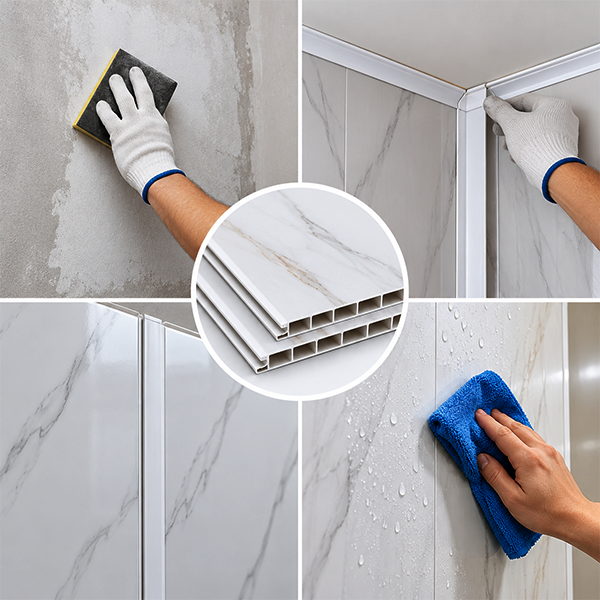
Inspect the wall, measure the area and confirm the panel system. The base should be stable, reasonably flat, clean and dry. Decide between direct fixing and a supporting batten framework, then check instructions for compatible adhesives, screws and spacing.
Surface preparation checklist
- Remove dust, grease, loose paint, wallpaper and flaking plaster.
- Repair cracks and uneven patches; allow repair materials to dry completely.
- Investigate leaks, seepage or persistent dampness before covering the wall. Panels may resist moisture, but they do not repair the source of water ingress.
- Check the wall with a long straightedge or level. Correct major irregularities or use an appropriate support framework.
- Mark electrical points, switches, pipes, corners and openings before cutting.
- If using battens, ensure they are securely fixed and aligned in one plane before mounting panels.
Dry-fit panels and review the layout from the main viewing angle to avoid narrow edge strips or awkward seams. For design comparisons, review PVC wall panel designs before confirming quantities.
2. How do you measure and plan the panel layout?
Measure wall height and width in several places because walls may not be square. Calculate coverage using the panel’s usable width and allow for cuts, damage and future repairs.
Plan panel direction and seam positions. Vertical panels may emphasise ceiling height, while horizontal runs can make a wall appear wider; check a sample against the room’s lighting and proportions. Keep adjoining patterns consistent where needed, and label panels before cutting. A physical sample viewed in the room is more reliable than judging colour from a screen alone.
Use a fine-toothed blade suitable for the material and support the panel while cutting to reduce chipping. Measure openings carefully; cutouts for switches, sockets and pipes must allow for fittings without compromising electrical or plumbing safety. Westman Steel’s PVC liner panel installation guide also advises cleaning debris from panels before fitting and using suitable cutting methods.
3. Which trims and joints give PVC panels a neat finish?
Trims finish exposed edges, corners and transitions. Common profiles include internal- and external-corner trims, end or J-trims, and joining profiles. Select trims made for the system and sized for the panel thickness. Plan them before fitting to avoid rework.
Check that trims are straight and aligned. At windows, doors and wall ends, test each cut before fastening. Where the design uses a decorative ribbed feature, compare the installation details for wall and ceiling fluted panels rather than assuming every profile uses the same joints or fixing method.
Leave room for movement
PVC can expand and contract as temperatures change. Panels should not be forced tightly between fixed boundaries unless the product instructions specifically call for that installation. Use the expansion allowance, joint treatment and fastening pattern stated by the manufacturer.
Westman Steel’s guide, for example, specifies room for expansion at the perimeter and warns that incorrect installation can cause buckling. Its measurements apply to its own system, not automatically to every PVC panel.
Keep seams straight and aligned, avoid over-tightening fixings, and do not fill movement gaps with an unapproved rigid material. In wet areas, seal joints and penetrations only with compatible products and as directed by the panel manufacturer. PVC panel surfaces may be water-resistant, but the wall assembly’s waterproofing depends on correct detailing around joints, edges and pipes.
4. What should you confirm with PVC panel manufacturers in Jaipur?
Before ordering, ask for the installation guide, substrate requirements, fixing method, compatible trims, cleaning instructions and warranty conditions. Confirm the intended application, thickness, finish, required fire-performance documentation, and approved adhesive or sealant. For Jaipur projects, check stock, delivery lead time and local installation support.
Dhabriya Polywood Ltd. lists its Jaipur address and product range on its website. Request the PVC wall panel brochure and verify the details for the exact model rather than relying on a general description. A written specification can help the installer and buyer work from the same expectations.
5. What are the common installation mistakes to avoid?
Avoid fitting panels over damp or unstable walls, skipping the layout, using incompatible adhesive, cutting inaccurate openings, misaligning the first panel or ignoring expansion allowances. Trims are part of the fixing and finishing system, not decoration alone.
Inspect the wall after every few panels: check alignment, joint closure and secure fixing before continuing. Do not conceal exposed edges, loose sections or damaged panels with excessive sealant. Follow the chosen product’s installation instructions and applicable building and electrical safety requirements.
6. How should you clean and maintain PVC wall panels?
Remove dust with a soft cloth; when needed, wipe with a damp cloth and mild soapy water. Dry excess water around edges and fittings, and test cleaners on an inconspicuous area first.
Avoid abrasive scouring pads, sharp tools and strong solvents unless the manufacturer approves them; these can scratch or dull the finish. Inspect trims and sealant periodically, and investigate recurring dampness, loose panels or open joints promptly. For printed or textured finishes, follow product-specific care guidance. Keep the cleaning instructions for future reference.
Conclusion
A lasting PVC wall panel installation begins with a sound, dry surface and careful planning. Measure before cutting, choose compatible trims, keep joints aligned and allow for movement according to the product’s instructions. Clean panels with gentle methods and investigate moisture problems instead of covering them up. When comparing pvc panel manufacturers in jaipur, evaluate installation support and written specifications alongside design and price. Following this checklist can help achieve a cleaner finish and reduce avoidable repairs.
FAQs
1. Can PVC wall panels be installed directly over existing walls?
Yes, provided the existing wall is stable, clean, dry and sufficiently even, and the panel system allows direct fixing. Repair loose plaster and investigate dampness before installation.
2. Do PVC wall panels need a framework?
Not always. Some systems support direct fixing, while others require battens or another suitable substrate. Follow the selected panel manufacturer’s installation instructions.
3. Why do PVC wall panels develop gaps or buckle?
Incorrect fixing, inadequate expansion allowances, uneven support or unsuitable installation conditions can cause gaps or buckling. Follow the product-specific joint, spacing and fastening instructions.
4. Which trims are used for PVC wall panel installation?
Common options include internal-corner trims, external-corner trims, J-trims and joining profiles. The correct choice depends on panel dimensions, edges, corners and the manufacturer’s system.
5. How do you clean PVC wall panels without damaging them?
Use a soft cloth, water and mild soap. Avoid abrasive pads and unapproved solvents, and follow the manufacturer’s cleaning instructions for printed or textured finishes.
6. Are PVC wall panels suitable for damp areas?
Moisture-resistant panels may suit selected damp-prone applications, but suitability depends on the specific product and installation system. They do not fix underlying leaks or replace required waterproofing.
7. What should you ask PVC panel manufacturers in Jaipur before buying?
Ask about panel thickness, finishes, intended applications, installation methods, compatible trims, warranty conditions, availability and after-sales support. Request written specifications for the selected product.