
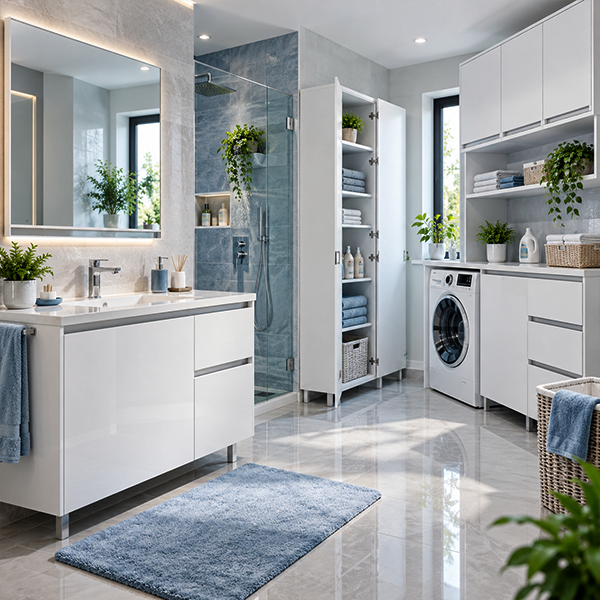
PVC Furniture for Bathrooms and Utility Areas: What to Check Before Buying
Bathrooms and utility areas work hard every day. Splashes, steam, cleaning products and limited ventilation can expose weaknesses in ordinary furniture. That is why pvc furniture is worth considering for cabinets, shelves and storage units. It can be easy to clean and generally less vulnerable to water-related damage than untreated wood-based materials, but quality and installation still matter. Before buying, check the material, construction, load capacity, fittings, finish, dimensions and warranty—not just the design or the word “waterproof.” This guide explains what to inspect before you choose.
What Is PVC Furniture, and Is It Suitable for Bathrooms?
PVC furniture is made using polyvinyl chloride profiles or boards to create storage units, cabinets, shelves and modular furniture. uPVC refers to unplasticised PVC, a rigid form used in many building and furniture applications. These materials can be practical in damp-prone spaces because they do not rust and are not affected by termites in the way timber can be.
Suitability depends on the whole unit, not just the board. Confirm that the model is intended for bathroom or utility use, and inspect its joints, edges, hardware and installation. Water-resistant material does not make every cabinet fully waterproof or suitable for standing water. Ask whether the warranty excludes damage from direct shower spray, flooding or incorrect installation. This small check can prevent a mismatch between the product’s real capabilities and your expectations.
1. Check the Material and Its Intended Use
Ask whether the furniture is made from PVC, uPVC, PVC-coated board or a combination. These are not interchangeable: a coating may protect the surface while the core, edges or internal components react differently to moisture.
Request a brochure or specification and confirm whether the unit suits a washbasin area, laundry corner, ventilated bathroom or space regularly exposed to splashes. For example, uPVC modular furniture can help you explore the types of modular options Dhabriya Polywood offers; check the product details with the supplier before choosing a specific unit for a wet area.
2. Inspect Construction, Joints and Edge Finishing
A cabinet may fail at a joint or fitting before its main panel. Look for neat edges, secure connections and aligned doors. Check screw points, panel flex and whether shelves sit firmly on their supports.
Ask how it is assembled and whether cut edges are sealed. Detergent bottles and cleaning equipment add weight, so the structure must match the load. Never assume PVC furniture can support stone tops, large basins or appliances; request written confirmation.
3. Choose Suitable Hinges, Handles and Hardware
Hinges, drawer runners, screws and handles affect long-term performance. Ask whether the hardware is suitable for humid conditions. Check hinges for looseness, drawers for smooth movement and handles for a firm fit. Near a shower or washing machine, ask how fittings are protected from splashes.
Check whether replacement parts are available; repairing a fitting is preferable to replacing an otherwise sound cabinet. Open and close each door several times in the showroom, and check that drawers do not scrape or catch. If the unit includes a mirror, light or electrical accessory, ask how it is rated for the intended location and who is responsible for safe installation.
4. Measure the Space Before Selecting a Design
Measure width, height and depth, accounting for door swings, drawers, plumbing, outlets and movement around the basin or washing machine. Keep stopcocks, traps and inspection points accessible for maintenance.
Wall-mounted storage can free floor space, provided the wall and fixings can support the load. In laundry areas, allow access to appliances, hoses and ventilation. A made-to-fit unit is useful only when measurements and service access are accurate. Measure around skirting boards and uneven walls, too. Ask the installer to confirm the final dimensions on site before fabrication, especially if the cabinet must fit between a basin and a door.
5. Look at Storage, Finish and Cleaning Requirements
Choose compartments for what you store: toiletries, towels, cleaning products or laundry supplies. Adjustable shelves offer flexibility, while closed cupboards hide everyday items. Avoid overfilling units or placing heavy containers on unrated shelves.
An easy-wipe surface is useful near sinks and laundry equipment. Ask which cleaners are safe; avoid abrasive pads or harsh chemicals unless approved. Wipe standing water and dry the cabinet after splashes. Moisture-resistant furniture still needs routine care.
6. Check Ventilation and Installation Conditions
PVC furniture cannot solve dampness in the room. Poor ventilation, leaks and condensation can still lead to mould on dust, sealants and nearby surfaces. The U.S. Environmental Protection Agency recommends controlling moisture, fixing leaks and improving bathroom ventilation to help prevent mould growth (EPA guidance).
Repair leaks before installation and check the floor, wall and plumbing. Keep cabinets away from direct shower spray where possible, improve ventilation, and ask how the unit will be anchored and sealed around pipes. For a broader renovation, PVC wet area doors may also be relevant when selecting a door designed for moisture-prone rooms.
7. Compare Price, Warranty and After-Sales Support
Do not compare quotes by price alone. Check whether they include the furniture body, shelves, hardware, installation, delivery, cut-outs and any basin or countertop. Ask the warranty period and whether it covers hardware, finish or installation-related damage. Confirm who handles service calls and whether replacement parts are available.
Get a written quote listing the model, dimensions, finish and accessories. For claims such as “100% waterproof,” “maintenance-free” or “fire-retardant,” ask for official documentation and clarify conditions or exclusions. Clear specifications make offers easier to compare. It is also sensible to check the delivery timeline, installation scope and whether any wall repairs, plumbing changes or sealing work are billed separately. The lowest initial quote may not be the lowest overall cost if essential work is excluded.
Common Mistakes to Avoid
Common mistakes include choosing by appearance alone, assuming every PVC product suits constant wet exposure, ignoring ventilation or plumbing access, buying weak hardware, overloading shelves and overlooking the warranty. Water resistance is not a reason to ignore leaks or standing water.
If the walls also need renovation, compare PVC wall panels as a separate material choice; wall finishes and furniture have different installation and performance requirements. Always follow the instructions for each product rather than assuming one material specification applies to the entire room.
Conclusion
The right PVC furniture should fit the space, suit its moisture exposure and provide dependable storage. Check the material, joints, hardware, load capacity, finish, installation and warranty before ordering. Ventilate the room and repair leaks promptly; moisture-resistant products cannot compensate for persistent dampness. Compare written quotations and choose a unit whose documented performance matches your household’s needs.
FAQs
1. Is PVC furniture suitable for bathrooms?
Yes, PVC furniture can be a practical choice for bathrooms because it is easy to clean and generally resistant to moisture. However, suitability depends on the product’s construction, fittings, installation and intended exposure to water.
2. What should I check before buying PVC bathroom furniture?
Check the material specification, joints, edge finishing, hardware, load capacity, dimensions, cleaning instructions and warranty. Confirm that the manufacturer recommends the particular unit for bathroom or utility-area use.
3. Is PVC furniture completely waterproof?
Not necessarily. Although PVC itself is moisture-resistant, joints, fittings, cut edges and other components can allow water ingress. Check the manufacturer’s specifications and avoid prolonged exposure to standing water unless the product is designed for it.
4. Does PVC furniture require regular maintenance?
PVC furniture generally requires little maintenance. Regularly wipe away dust, splashes and standing water, use manufacturer-approved cleaning products, and inspect hinges and fittings periodically.
5. Can PVC furniture be used in a laundry or utility area?
Yes. PVC cabinets and shelves can provide useful storage for detergents, cleaning supplies and household essentials. Check shelf load capacity and allow adequate space for appliances, hoses, plumbing and ventilation.
6. How can I compare PVC furniture prices effectively?
Compare quotations for the same dimensions, material specification, finish and hardware. Check whether installation, delivery, accessories, plumbing cut-outs and warranty coverage are included before choosing the lowest-priced option.