
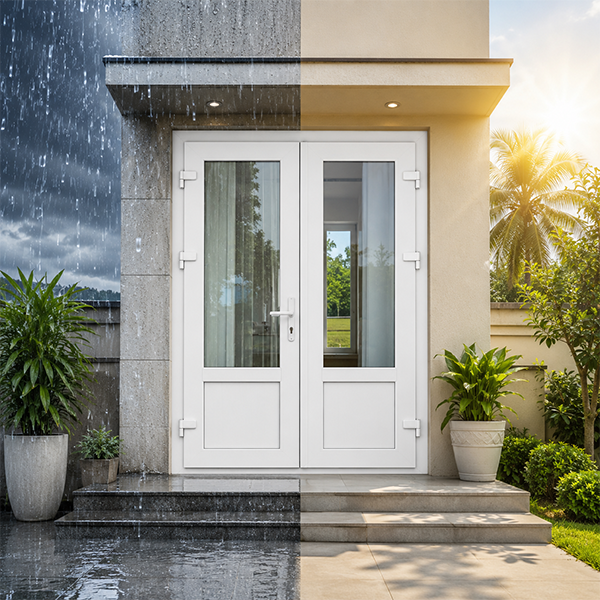
PVC Doors for Indian Weather: Why They Actually Hold Up
India doesn’t go easy on anything. One season you’re dealing with 45°C heat baking everything in sight, the next you’ve got monsoon rains hammering your walls for three straight months. Throw in coastal humidity, urban dust, and the occasional termite problem and you start to understand why building materials in this country either prove themselves or fall apart fast.
Wood has been the traditional answer for decades. But anyone who’s watched a wooden door swell shut during July or crack through a Rajasthan summer knows the frustration. That’s where a good PVC door company makes all the difference, offering modern solutions built specifically for conditions like these.
What Indian Weather Actually Does to Your Doors
Before getting into solutions, it’s worth being honest about the problem.
Summer heat regularly crosses 40°C across large parts of the country, causing traditional materials to expand, lose shape, and crack over time. Monsoon moisture gets absorbed by wood, leading to warping and fungal growth that no amount of polish or varnish permanently fixes. Coastal cities like Mumbai, Kochi, and Chennai deal with year-round humidity that slowly eats through conventional materials, often invisibly, until the damage is already done. And in urban centers, dust, pollution, and fluctuating temperatures do their own quiet damage across years.
The honest problem with most traditional door materials is that they were designed for one or two of these conditions—not all four at once. PVC was engineered differently.
Moisture Is the Real Enemy and PVC Doesn’t Care
The single biggest advantage is straightforward: PVC doesn’t absorb water.
While a wooden door quietly soaks up moisture through monsoon season, a well-made PVC door holds its shape, finish, and structural integrity regardless of how wet things get. This is why you’ll find these doors installed in bathrooms, kitchens, utility rooms, balconies, and coastal homes—anywhere moisture is a daily reality rather than an occasional visitor.
No warping. No swelling. No mold creeping along the edges six months in. Just a door that looks and functions the same in humid October as it did in dry March. For Indian homeowners, that consistency is genuinely valuable—not as a luxury, but as a basic expectation that traditional materials often fail to meet.
Built for Heat, Not Just Looks
Rajasthan summers are not gentle. Neither are Gujarat’s or Delhi’s. Prolonged exposure to extreme heat causes many materials to crack, blister, or deform, leading to repeated repair cycles that add up financially over time.
High-quality PVC is specifically engineered to handle temperature extremes without losing structural integrity. It doesn’t crack under heat stress. It doesn’t split at the edges or warp at the frame. For homeowners in high-temperature regions, this means fewer repairs, a longer product life, and no unpleasant surprises when temperatures peak in May and June. It’s also why choosing the right PVC door company matters—quality of manufacturing directly determines how well the door actually holds up in these conditions.
The same weather-resistant logic extends naturally to complementary products like PVC ceiling fluted panel and PVC wall panel solutions, which is why more homeowners are now designing entire rooms around these materials rather than mixing them with high-maintenance alternatives.
Termites Don’t Touch It
This one matters more than most people initially realize.
Termite damage is a serious, expensive problem across large parts of India. Wooden doors and frames require regular chemical treatment just to stay protected—and even then, infestations happen. The damage is often structural and costly to fix.
PVC simply isn’t on the termite menu. Insects cannot feed on it, burrow into it, or damage it the way they do with organic materials. No treatment schedule. No annual pest control costs specifically for your doors. No hidden structural damage was discovered years later. For homeowners who have dealt with termite problems before, this single advantage is often reason enough to make the switch permanently.
Maintenance That Fits Real Life
Be honest—how often do you actually repaint or polish your doors?
For most households, the real answer is not as often as the material requires. With wood, that gap between required and actual maintenance shows up visibly over time—fading finish, chipped paint, and dull surfaces that quietly drag down the look of an otherwise well-kept home.
With PVC, a damp cloth and a basic cleaning solution genuinely are all the upkeep needed. No repainting. No polishing. No professional servicing every few years. Whether it’s a PVC plastic folding door in a compact bathroom or a full-sized entrance door, the surface stays clean with minimal effort—a realistic match for how most people actually live: busy, practical, and not looking for more chores.
For anyone searching for the best PVC door in Jaipur, whether for a commercial space, rental property, or large residential project, this low-maintenance reality translates directly into measurable long-term savings.
Stronger Than the Stereotype
There’s a persistent assumption that because PVC is lightweight, it must be structurally weak. That assumption is outdated.
Modern manufacturing processes have significantly advanced what’s possible with PVC. Today’s doors are built to handle frequent daily use, environmental stress, temperature fluctuations, and physical wear without losing their shape or performance. The material is reinforced, tested, and designed for longevity, not just appearance.
Lightweight and durable are not opposites. PVC manages to be both, which is part of what makes it practical across such a wide range of applications.
Design Has Caught Up With Durability
Early PVC products had a reputation for looking noticeably synthetic—functional, perhaps, but not particularly attractive. That gap between durability and aesthetics has closed considerably.
Today’s range includes wood-finish textures that genuinely replicate the warmth of natural timber, decorative printed designs, glass panel combinations, modern textured finishes, and clean minimalist styles that work equally well in a traditional home or a contemporary apartment. Homeowners no longer have to choose between a door that looks good and one that lasts. The better options now offer both without compromise.
The Financial Case Is Simple
Lower upfront cost compared to premium wood. Near-zero maintenance expenses year on year. No termite treatment. No repainting. A longer functional lifespan before replacement becomes necessary.
When you run those numbers across ten or fifteen years, the total cost of ownership is significantly lower than most traditional alternatives. For homeowners renovating on a realistic budget, or builders and developers working at scale, the value proposition is difficult to argue against.
It Works Everywhere in India
Hot and dry Rajasthan. Humid coastal Kerala. Heavy rainfall in Northeast India. Polluted and fast-changing urban environments in Delhi and Mumbai. Moderate climates across central India.
Very few building materials perform consistently well across all of these environments. PVC does, and that geographic versatility is a big part of why adoption has grown so steadily across regions that have almost nothing else in common climatically.
Building Interiors That Actually Last
The broader shift happening in Indian homes isn’t just about swapping one door material for another. Homeowners are increasingly thinking about complete interior systems—pairing durable door solutions with PVC wall panel installations and PVC ceiling fluted panel designs to create spaces that are genuinely low-maintenance from floor to ceiling.
This approach makes practical sense. If your door resists moisture but your walls don’t, you haven’t fully solved the problem. Integrated solutions from trusted wall panel manufacturers in India are making it easier to build interiors that hold up as a whole—not just in parts.
Conclusion
Indian weather is demanding. The materials you build need to match that reality. PVC has earned its place in modern Indian interiors through consistent, practical performance—handling moisture, heat, pests, and daily wear in ways that traditional materials simply cannot match reliably over time.
For homeowners who want quality they genuinely won’t have to think about again, Dhabriya Polywood remains one of the most trusted names in this space recognized for products that deliver long after installation day and a reputation built on durability rather than just promise.