
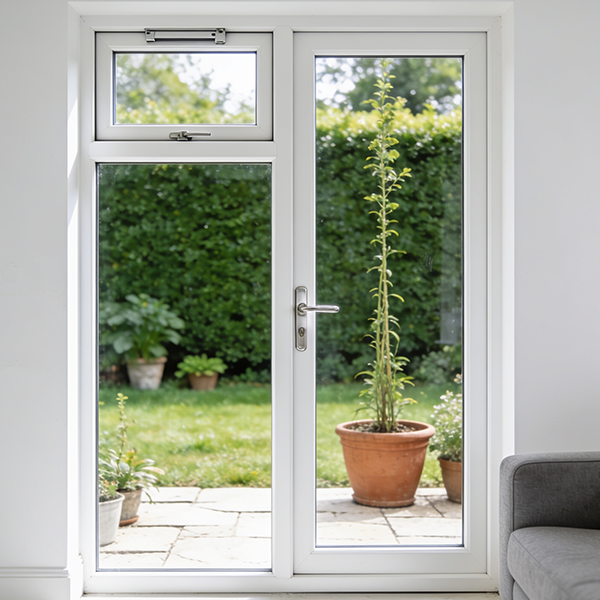
Are uPVC Doors and Windows Worth It? Here’s What You Should Know
Every home renovation comes with a list of decisions that feel more complicated than they should. If you’ve been exploring uPVC doors in Jaipur, you already know what that feels like—doors and windows alone affect almost everything: how your home looks, how safe it feels, how much your electricity bill is, and how much time you spend on upkeep over the years.
uPVC has been generating a lot of conversation in Indian homes lately. Some people swear by it. Others aren’t sure if it’s genuinely good or just well-marketed. And then there’s a third group—homeowners mid-renovation, staring at quotes, trying to figure out if the premium is actually justified. If you’re somewhere in that mix, here’s an honest breakdown of what you’re actually getting.
First, What Actually Is uPVC?
uPVC stands for unplasticized polyvinyl chloride. Strip away the technical name and it’s essentially a rigid, high-strength material that doesn’t absorb moisture, doesn’t rot, and doesn’t need the kind of regular attention that wood demands.
It comes in a wide range of designs, finishes, and colors, which means it’s not the one-look-fits-all material some people assume it to be. Modern apartments, traditional bungalows, commercial offices, and independent houses—there’s a version that works for each setting without looking out of place.
Why People Are Actually Switching
This isn’t a trend driven by aesthetics alone. There are solid, practical reasons behind the shift.
It lasts. Wood warps. Aluminum corrodes. UPVC largely just… doesn’t. It resists rust, weather damage, and the slow deterioration that most other materials quietly go through over years of use. For homeowners who want to install something once and genuinely not think about it again for a long time, that kind of durability is a meaningful advantage, not a marketing claim.
It barely needs maintenance. Think about how often you’ve actually repainted or polished your wooden frames versus how often you were supposed to. The gap between required and actual maintenance is where most traditional materials quietly degrade. With UPVC, a wipe-down with a soft cloth and mild soap is genuinely sufficient. No painting, no polishing, no annual servicing call. That simplicity adds up to real savings in both time and money stretched across a decade of ownership.
It keeps your home comfortable. The insulation properties here are worth taking seriously rather than treating as a footnote. UPVC frames significantly reduce heat transfer—keeping rooms cooler in summer and retaining warmth during cooler months. For Indian homes that rely heavily on air conditioning through the long summer months, that reduced load on your AC translates into a tangible monthly saving, not just a theoretical environmental benefit.
It’s noticeably quieter. If you live near a busy road, a market, or simply a noisy neighborhood, the airtight sealing in quality UPVC installations makes a real difference to how much of that sound actually reaches you indoors. It’s one of those improvements that’s difficult to fully appreciate until you’ve experienced it and then impossible to go back from.
It’s more secure. Multi-point locking systems are standard in quality uPVC doors. Compared to many traditional alternatives, the combination of strong frame construction and advanced locking mechanisms gives homeowners a genuinely higher level of protection without requiring additional investment in security hardware.
How Does It Hold Up in Indian Weather?
This is the question that matters most for anyone buying in India, and it’s where uPVC makes its strongest case.
India puts building materials through the full range of scorching summers that regularly cross 40°C, heavy monsoon seasons, coastal humidity that never really lets up, and dusty urban environments that accelerate wear on almost everything. Most materials handle one or two of these conditions reasonably well. Very few handle all of them consistently over many years without visible degradation.
uPVC is resistant to moisture, UV exposure, and temperature fluctuation. It doesn’t swell shut during the rainy season the way wooden frames do. It doesn’t crack or deform under peak summer heat. It doesn’t corrode in coastal air. For homeowners across different regions, whether you’re in Kerala, Mumbai, Delhi, or searching specifically for UPVC doors in Jaipur, the performance holds up across environments without requiring constant attention or repair cycles.
This geographic versatility is underappreciated. Most building materials have a sweet spot, a climate where they perform well and others where they struggle. UPVC’s consistency across India’s diverse weather conditions is one of the genuinely compelling reasons behind its growing adoption.
But Does It Actually Look Good?
This is the myth worth addressing directly, because it holds some people back unnecessarily.
Early uPVC products had a reputation for looking functional but uninspired—the kind of thing you’d choose because it made sense, not because it added anything to a room. That reputation is largely outdated now, and the gap has closed considerably.
Today’s range from the best UPVC window manufacturers includes sliding windows, casement designs, French windows, foldable doors, and combination styles—available in finishes that genuinely replicate the warmth of natural timber or the clean precision of modern minimalism. Wood-look finishes have improved to the point where the difference isn’t immediately obvious. Contemporary matte and textured options look genuinely premium rather than plasticky.
Whether your home is a sleek contemporary apartment or a traditional independent house with classic design sensibilities, there are options available that complement rather than clash with your existing aesthetic. The days of UPVC being purely a practical compromise are behind us.
The Cost Question Looked at Honestly
Upfront, uPVC can feel more expensive than some traditional alternatives. That initial sticker comparison is where a lot of people stop, and it’s the wrong place to stop.
The more relevant question isn’t what it costs to buy. It’s what it costs to own over ten or fifteen years of actual use. Factor in zero repainting, minimal repair expenses, no termite treatment, reduced energy bills from better insulation, and a functional lifespan measured in decades rather than years and the total cost of ownership looks very different from the purchase price alone.
Most homeowners who do that full calculation find uPVC delivers significantly better long-term value than materials that seemed cheaper at the point of purchase but demanded consistent investment to maintain their performance and appearance.
Common Myths, Quickly Addressed
“It looks cheap.” Modern options are available in premium finishes that rival high-end materials at a fraction of the long-term maintenance cost. This perception belongs to an earlier generation of products.
“It can’t handle extreme weather.” It’s specifically engineered to do exactly that. Heat, monsoon rain, coastal humidity, and UV exposure: UPVC handles all of these without significant degradation. This is precisely why adoption has grown fastest in regions with the most demanding weather.
“It needs frequent replacement.” Quality installations last decades with minimal intervention. For well-made products properly installed, this concern simply doesn’t hold up against real-world performance data.
“It only suits modern homes.” The design range is wide enough to work with traditional architecture just as naturally as contemporary builds. The assumption that UPVC is exclusively a modern aesthetic choice misunderstands how varied the product range has become.
What to Actually Look For Before Buying
If you’re moving forward, a few things genuinely matter beyond just picking a design you like.
Material quality is the foundation; not all UPVC is manufactured equally, and the difference in performance over time between quality and budget products is real and significant. Hardware quality matters just as much—locks, hinges, and handles affect both security and how smoothly everything functions through years of daily use. Professional installation is non-negotiable; even excellent products underperform when fitted incorrectly, and the difference shows up quickly. And brand reputation, verified through actual customer experience rather than marketing materials, is worth researching carefully before committing to any supplier.
So, Is It Actually Worth It?
For most Indian homeowners, yes, genuinely and without much qualification.
Not because it’s fashionable, but because it solves real, persistent problems that traditional materials have always struggled with: weather resilience across diverse Indian climates, minimal maintenance demands, meaningful energy efficiency, strong security, and design flexibility—all in one product category. The value compounds over time in ways that aren’t always obvious at the point of purchase but become very clear a few years into ownership.
For those looking for quality they can genuinely rely on, Dhabriya Polywood has built a strong and consistent reputation in this space known for products that perform exactly as promised and a standard of manufacturing that supports the long-term claims UPVC makes.