
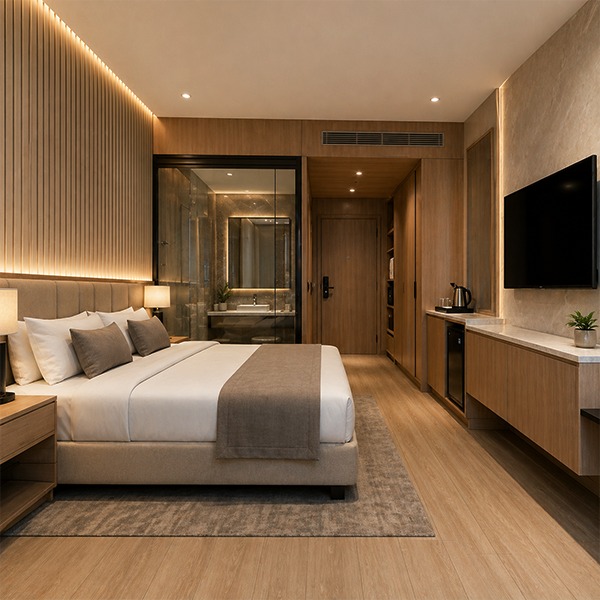
Why PVC Is the Smart Choice for Hotels & Hospitality Interiors?
Walk into any hotel and you usually get a feeling within a few minutes. Sometimes it feels fresh and well-kept. Sometimes something feels slightly off, even if everything looks fine at first glance. It’s not always about luxury or expensive design. Often, it comes down to small details. A clean wall, a door that shuts properly, surfaces that don’t look worn out too quickly.
That’s where hotel interiors are different from homes.
At home, things are used carefully and at a slower pace. In hotels, everything is used repeatedly. Guests keep changing, rooms are cleaned constantly, and furniture is handled every day. There is no real break in usage.
So designers are not only thinking about how something looks on the first day. The bigger concern is how it will look and perform after months of regular use.
That shift in thinking is one of the reasons materials like PVC are being considered more seriously in hospitality spaces.
Hospitality Spaces Work Under Pressure
Hotels don’t really pause. Even when things look calm, work is always going on in the background.
Rooms are cleaned multiple times. Doors are opened and closed frequently. Surfaces are wiped again and again. Staff move quickly. Guests use everything without much thought.
Because of this, interiors face constant handling.
Over time, small changes start showing. A surface may lose its finish. A door may stop aligning properly. Panels may not feel as smooth as they did earlier. None of this happens suddenly, but it adds up.
And once it becomes visible, it starts affecting the overall experience.
That is why durability matters so much in hotels. It is not a bonus feature. It is expected.
Where Traditional Materials Start Showing Limits
Wood and painted surfaces have been used for years, and they still have their place. But in hotel environments, their behaviour becomes more noticeable.
Wood reacts to weather. In humid conditions, it absorbs moisture and slightly expands. In dry conditions, it can shrink. These changes are slow, but they affect how things fit over time.
Paint has its own issues. With regular cleaning and contact, marks begin to appear. Some areas may fade faster than others. Surfaces may start looking uneven.
These are not major problems in the beginning. But in a place that is used continuously, they become visible much sooner.
And once that happens, maintenance becomes a regular task instead of an occasional one.
Why PVC Starts Making More Sense
This is where PVC begins to feel more practical.
It is not about replacing everything. It is about choosing materials that handle daily use better.
PVC does not react much to moisture or temperature changes. It does not expand in monsoon or shrink in dry conditions.
Because of this, its shape stays more stable.
Doors remain aligned. Panels stay in place. You don’t have to keep fixing small issues again and again.
For hotel teams, this reduces effort and avoids unnecessary interruptions.
Cleaning Becomes Easier
Cleaning in hotels is not optional. It is part of daily routine.
Every room is cleaned. Surfaces are wiped multiple times. Hygiene needs to be maintained without fail.
If a material needs special care, it slows things down.
PVC keeps things simple here
It does not need polishing. It does not require extra treatment. Regular cleaning is usually enough to keep it in good condition.
For housekeeping teams, this makes work easier. For management, it keeps operations smoother.
Moisture Is Always Present
Hotels deal with moisture in many ways. Bathrooms, kitchens, mopping, and even weather conditions all add to it.
Wood absorbs moisture over time, which is where swelling or surface issues begin.
PVC behaves differently.
It does not absorb water. It stays stable even in areas where moisture is common. This makes it easier to use across different parts of the property without worrying too much about damage.
In hotels, consistency matters more than people realise. Guests may not notice every detail, but they do notice when something feels slightly worn out.
If one room looks fresher than another, it creates a different impression. PVC helps maintain that balance.
It does not change much over time. Surfaces stay uniform. The overall finish remains similar. That steady look helps maintain the standard hotels aim for.
Design Is No Longer Limited
Earlier, PVC was seen mainly as a practical option. That has changed now.
Today, PVC comes in different finishes, textures, and colours. Some options even look similar to wood.This gives designers more freedom. They can achieve the look they want without depending only on traditional materials.
So it is not just about function anymore. It also fits well into modern design needs.
Cost Over Time Feels Different
Hotels do not look only at initial cost. They think long term. Wood may need polishing. Paint may need touch-ups. Repairs become part of regular maintenance. PVC reduces most of these efforts. Once installed, it continues to work without frequent fixes.
Over time, this reduces both cost and effort, which makes a difference in large properties.
Works Across Different Areas
Another advantage is flexibility. PVC can be used in many parts of a hotel without much change. It fits into wall panels, wardrobes, partitions, ceilings, and more.
In rooms, it keeps the space looking neat.
In corridors, it handles movement better.
In service areas, it simplifies upkeep.
This makes it easier to keep a consistent look across the entire property.
Quality Still Matters
Even with the right material, quality plays a role. At Dhabriya Polywood, the focus is not only on how something looks when installed, but also on how it performs later. In hotels, this difference becomes visible with time. A good material combined with good quality gives better results in real use.
Conclusion
In hotels, interiors are not just about first impressions. They are used every day, by different people, in different ways. That usage shows over time, whether we notice it immediately or not.
Some materials need regular attention to stay in good shape. Whereas some manage to hold up with less effort. That difference becomes clear only after few months of usage.
PVC works well in these situations because it does not demand constant care. It stays steady and keeps spaces looking the same without too many adjustments.
For hotels, these factors matters more than just appearance.
In the end, it is less about trends and more about daily practicality. And when something continues to work without creating extra problems, it naturally becomes the preferred and right choice.